Company news and industry news

A worker moving along a roof edge, a steel beam or a scaffold run has to unhook from one anchor point and reach for the next. During that short move, a single-leg lanyard leaves the worker attached to nothing. A Twin Shock Absorber Lanyard closes that gap by giving the worker two legs, so one hook stays on an anchor while the other moves. Two legs, so one hook stays on the anchor The product is a double lanyard with two scaffold hooks, used as a component of a personal fall arrest system to connect a safety harness to an anchor. The worker clips one hook onto the next anchor before releasing the previous one. A Twin Shock Absorber Lanyard therefore lets a worker keep a connection through every change of position, which is why many sites ask for twin legs on work that involves frequent repositioning, such as steel erection, facade work and scaffold climbing. Scaffold hooks suit a Twin Shock Absorber Lanyard because they open wide enough to clip onto tubes and structural members, and a locking gate keeps the hook closed once it is on. The hook does the connecting, the absorber does the energy work, and the two parts have to be specified together. What happens in a fall Each leg of a Twin Shock Absorber Lanyard carries its own shock absorber. In a fall, the leg that is loaded opens its absorber, which pulls out a folded, stitched webbing pack to take energy out of the fall. The other leg stays unused. The product description states the lanyard is designed to dissipate the energy developed in a fall of 4m maximum height and to limit the force on the user's body to a maximum of 6kN. That force limit is the reason the absorber exists. Stopping a fall is only part of the job, since the sudden stop itself can injure a worker if the force reaches the body unchecked. A fall arrest lanyard built to a 6kN limit takes a share of that energy out before it reaches the harness and the worker. Once a leg has arrested a fall, the Twin Shock Absorber Lanyard goes out of service. The absorber has done its work, and a pack that has opened cannot do it a second time. The unused leg is stored on the harness between moves so it does not trail behind the worker and snag on equipment. Material choices across the twin range The Twin Shock Absorber Lanyard range on the product page comes in several constructions. Webbing versions are flat and light, and damage shows up clearly during inspection. Kernmantle rope versions use a protected core inside a woven sheath, and the sheath takes the abrasion from edges and rough surfaces. Polyester versions suit outdoor work, since polyester holds up well to sun and moisture, and the range includes an adjustable polyester model for work positions that call for a different length. An elastic version is listed for ANSI markets, and its stretch helps keep the legs from dragging when the worker moves. Buyers comparing these constructions are really choosing between how a fall arrest lanyard behaves in daily handling. A Twin Shock Absorber Lanyard used mainly on open steel will see different wear than one used on a concrete edge, so the right leg material follows the site. Standards and the one-person rule The product is personal protective equipment under the EU 2016/425 PPE regulation, and it is for one person only. It must not be loaded beyond its strength rating or used for any purpose other than the one it was designed for. A fall arrest lanyard is not a lifting sling or a tie-down, and a supplier that states this plainly on the product page is describing the limits correctly. Jinhua JECH lists EN 354, EN 355 and ANSI Z359.13 among the standards its products have passed, together with the CE and CSA marks. Distributors should ask for the certificate that matches the exact model and the market it will be sold in, since a lanyard certified for one region does not carry that approval automatically into another. Specifying a twin lanyard for a project Buyers can set out the order in four lines: leg material, length, hook type and the standard the market requires. A Twin Shock Absorber Lanyard matched to those four details arrives ready for the site without a second round of questions. Private label and custom orders can change webbing colour, labelling and packaging. The absorber construction and the hooks stay tied to the tested design, because those are the parts the certificate covers. A Twin Shock Absorber Lanyard supplied with its test documents, clear markings and a pack that protects the absorber gives a distributor a product that can be inspected, sold and used without guesswork.
Creating Attachment Points for Hand Tools Tools used on elevated work platforms do not always have built-in attachment points for tethering. Hammers, pliers, screwdrivers, and other equipment may require an additional connection solution before being incorporated into a tool tethering system. For distributors supplying construction and industrial maintenance markets, Silicone Tool Tape provides an option for creating attachment points on selected tools. Jinhua JECH Tools Co., Ltd. includes silicone tool tape in its tool lanyard product range. The product is designed for tools without integral attachment points and can be used alongside compatible tool tethers. For B2B buyers, key purchasing considerations include material specifications, dimensions, tool compatibility, packaging, and customization requirements. Material Characteristics and Application Silicone is the material specified for this tool attachment product. Its flexibility supports application around different tool shapes, while the product information also identifies heat resistance and non-slip characteristics. The tape can be cut to size, making dimensions an important consideration during procurement. Buyers should confirm available widths and lengths, recommended application methods, and any restrictions on cutting or wrapping with the manufacturer before approving an order. Silicone Tool Tape is listed for applications involving hammers, pliers, screwdrivers, and power tools. However, suitability depends on the tool's shape, surface, weight, and intended working conditions. Buyers should assess these factors rather than assuming one configuration fits every tool. Matching Tape to Tool Tethering Requirements The attachment point created by the tape must work with the intended tool tether. During product evaluation, purchasing teams should consider the following details: Tool geometry: Identify a suitable section of the handle or body for attachment. Tool weight: Confirm that the complete attachment arrangement is appropriate for the tool. Tether compatibility: Check that the created connection point works with the selected tether. Working environment: Consider exposure to moisture, abrasion, heat, and other site conditions. Application method: Request the manufacturer's recommended wrapping instructions. For example, a screwdriver with a relatively simple handle shape may require a different wrapping arrangement from a power tool with an irregular housing. The attachment should not interfere with controls, moving parts, or normal operation. Manufacturing and Quality Considerations JECH manufactures personal protective equipment and work-at-height accessories, including tool lanyards and related products. Its wider production facilities include textile machinery, dyeing equipment, and computerized pattern sewing machines. The company also reports an in-house testing laboratory and a quality management system referencing ISO 9001:2015. These capabilities describe the manufacturer's broader operations. Buyers should request product-specific material information and inspection details for silicone tape rather than assuming that every factory test or certification applies to this item. When evaluating a Silicone Tool Tape supplier, procurement teams can request confirmation of material specifications, supplied dimensions, packaging details, inspection arrangements, and available customization. If the tape will be included in a tool tethering kit, compatibility requirements for the complete assembly should also be clarified. Customization and Bulk Order Planning Customization requirements should be confirmed before quotation approval. Relevant details may include tape dimensions, available colors, packaging quantities, labeling, and private-label presentation. Options should be verified with the manufacturer for the requested order. A quotation inquiry can specify the intended tool types, approximate tool-weight range, preferred dimensions, order quantity, destination market, and packaging requirements. Providing these details together helps the supplier assess the requested configuration and identify any information needed before production. For repeat orders, distributors should retain an approved product reference and document agreed specifications. This is particularly useful when supplying different customers with varying tool inventories or packaging preferences. Coordinating Tool Attachment Products Silicone Tool Tape can be included in product assortments alongside tool lanyards and other work-at-height accessories. The tape provides an attachment point for selected tools, while the tether connects the tool to an appropriate retention arrangement. JECH's product range includes tool lanyards and personal protective equipment for work at height. Distributors sourcing related products can discuss their intended applications and compatibility requirements together, while confirming the specifications of each item separately. Before placing a bulk order, purchasing teams should review the material information, dimensions, application instructions, packaging configuration, and customization options. These details provide a basis for quotation comparison, sample approval, and consistent purchasing requirements across future orders.
Harness Construction and B2B Purchasing Requirements For distributors supplying construction, industrial maintenance, and work-at-height equipment markets, a CE Full Body Safety Harness requires more than a basic product specification. Webbing material, stitching, attachment points, adjustment systems, and conformity documentation all influence the suitability of a harness for its intended application. Jinhua JECH Tools Co., Ltd. manufactures personal protective equipment for work at height, including full body harnesses, energy-absorbing lanyards, and fall arresters. Its manufacturing equipment includes textile machinery and computerized pattern sewing machines. For overseas buyers, understanding these production details helps clarify product configurations, customization requirements, and quality expectations before placing bulk orders. Polyester Webbing and Structural Stitching Polyester webbing forms the main structural component of many harness designs. Its width, construction, and assembly must correspond to the specifications of the selected model. Buyers should confirm these details through the manufacturer's technical documentation rather than assuming that all products within one category share identical specifications. During production, webbing is cut and assembled according to the harness design. Stitching around load-bearing connections requires particular attention because these areas connect the straps and hardware. Computerized pattern sewing machines support consistent execution of specified stitching patterns during batch production. For distributors and private-label buyers, relevant purchasing details include webbing dimensions, color, buckle type, adjustment structure, and applicable product standards. Confirming these requirements before production helps maintain consistency between approved samples and subsequent orders. Attachment Points and Harness Configurations Attachment arrangements distinguish different harness models. A dorsal D-ring is commonly specified for fall-arrest applications, while certain configurations include front or side attachment points for additional functions. JECH's product range includes harnesses with different attachment arrangements and adjustment structures. Depending on the model, features may include chest, shoulder, thigh, or waist adjustments, as well as additional padding. Configuration Typical Features Purchasing Consideration Basic fall-arrest harness Dorsal attachment point, shoulder and thigh straps Confirm the applicable EN 361 documentation Multi-attachment harness May include front or side attachment points Verify the intended function of each attachment Padded harness Additional waist or back padding on selected models Confirm dimensions, material, and configuration Adjustable harness Adjustable chest, shoulder, or thigh straps Check adjustment range and fit requirements These configurations are not interchangeable. Buyers should confirm the permitted application and certified configuration of the exact model before selecting products for a particular work system. Quality Control During Production A CE Full Body Safety Harness requires control of both component specifications and finished-product conformity. JECH reports operating an in-house testing laboratory that conducts key product tests, alongside a quality management system referencing ISO 9001:2015. For B2B procurement, quality discussions should cover incoming materials, sewing operations, hardware installation, and finished-product inspection. Buyers can request information about the inspection procedures and acceptance criteria applicable to their selected model. Batch consistency is particularly important for distributors managing repeat orders. If a purchase specification includes a particular webbing color, buckle type, attachment arrangement, or packaging format, these details should be recorded in the approved product specification. Changes to safety-related components should be reviewed before production rather than treated as ordinary cosmetic adjustments. CE Standards and Product Documentation JECH identifies Regulation (EU) 2016/425 and relevant European PPE standards in its product information. Its harness range includes models referencing EN 361, while selected configurations may also reference EN 358, EN 813, or EN 1497. These standards address different equipment functions. EN 361 covers full body harnesses used in fall-arrest systems, while other standards apply to specific equipment functions or applications. Buyers should therefore verify the standard and conformity documentation associated with the exact model. For a CE Full Body Safety Harness order, purchasing records should identify the model number, applicable standard, product labeling, and required conformity documents. Importers supplying multiple markets should confirm destination-market requirements before finalizing their purchase specifications. Customization and Bulk Order Coordination Customization may involve product color, hardware selection, adjustment arrangements, and packaging. JECH lists color customization for selected harness models, although available options should be confirmed individually. A detailed quotation request should include the target model, intended application, attachment arrangement, preferred color, order quantity, packaging requirements, and destination market. Providing these details together helps the manufacturer assess the requested configuration and clarify production requirements. Private-label buyers should also confirm label artwork, carton markings, and product identification. Any requested change involving safety-related components should be checked against the approved model documentation before manufacturing begins. Manufacturing Information for Repeat Orders For distributors and equipment suppliers, repeat purchasing depends on clear specifications and consistent communication with the manufacturer. A CE Full Body Safety Harness purchasing program should establish an approved model reference, documented configuration, inspection expectations, and packaging details before production. JECH manufactures several categories of work-at-height equipment, allowing buyers to discuss harnesses alongside related products such as energy-absorbing lanyards and fall arresters. Compatibility must still be verified against the specifications and intended functions of the individual products. Before approving a bulk order, buyers can request the technical data sheet, applicable conformity documents, customization options, and packaging information for the selected model. These records provide a basis for quotation comparison, sample approval, and consistent purchasing requirements across future orders.
Buyers sourcing anchorage hardware for fall protection and cargo restraint applications have shifted how they evaluate connector rings over recent sourcing cycles, moving away from judging a ring purely on its visible thickness and toward requesting documented load ratings before placing an order. Heavy Duty Tie Down Rings that look nearly identical in size and shape can carry meaningfully different certified load capacities depending on the metal grade and forming process used, and buyers who skip this verification step are increasingly the exception rather than the norm. Suppliers report that requests for Heavy Duty Tie Down Rings with documented, batch-specific load data have grown noticeably compared to a few sourcing cycles ago. Forged Construction Is Becoming the Buyer-Preferred Standard A steel D-ring connector produced through forging generally achieves higher load capacity than a stamped equivalent of similar visible dimensions, since forging aligns the metal's internal grain structure to resist fracture under load rather than leaving stress points that stamping from flat stock can introduce. Buyers sourcing Heavy Duty Tie Down Rings increasingly request forging method as a specific line item in sourcing conversations rather than assuming all rings marketed under a similar size designation share equivalent structural integrity. This shift reflects growing buyer awareness that visual similarity between a stamped and forged ring doesn't indicate comparable strength. Documented Load Testing Is Replacing General Durability Claims Buyers evaluating Heavy Duty Tie Down Rings now commonly request documentation showing the specific load a ring withstands without fracture, such as a rating around 22.2 kN, rather than accepting a general "heavy duty" or "high strength" description without a supporting figure. This trend parallels broader movement across the fall protection and rigging hardware industry toward quantified specifications buyers can compare directly across suppliers, rather than relying on marketing language that varies in meaning from one manufacturer to the next. Comparing Ring Types Across Growing Application Categories for Heavy Duty Tie Down Rings Ring Type Primary Material Typical Application Trend Steel D-Ring Carbon or alloy steel Heavy industrial and construction anchorage Aluminum D-Ring Aluminum alloy Weight-sensitive climbing and rope access Insulated D-Ring Steel with insulating coating Electrical and utility work environments Stamped D-Ring Flat steel stock Lower-load, cost-sensitive applications Buyers supplying electrical utility and telecom customers are increasingly specifying insulated variants as this application category grows, reflecting broader industry attention to electrical hazard mitigation in anchorage hardware selection. Material Choice Is Splitting Along Weight-Versus-Strength Lines An aluminum D-ring appeals to buyers supplying rope access and climbing markets where reducing total equipment weight matters directly to end users carrying gear over long work shifts, while steel remains the default for buyers prioritizing load capacity over weight savings. This split has become more pronounced as rope access and technical rigging markets grow as a distinct buyer segment for Heavy Duty Tie Down Rings, separate from traditional construction and industrial anchorage customers, each with different priorities driving material selection. Certification Documentation Requests Have Grown More Specific Buyers importing a load rated anchorage ring for regulated industrial use increasingly request certification documentation tied to the specific standard governing their application, whether that's general fall protection hardware certification or standards specific to rigging and tie-down equipment. Manufacturers running an in-house testing lab capable of validating load ratings for Heavy Duty Tie Down Rings against multiple certification frameworks are better positioned to serve buyers distributing into markets with varying regional standards than suppliers relying solely on a single certification pathway. Customization and Bulk Supply for Growing Demand Buyers placing bulk orders for a forged D-ring program spanning multiple sizes and finishes should confirm production capacity can support consistent load-rating documentation across every unit in a large order, not just a sample tested during initial qualification. Manufacturers running dedicated production across steel, aluminum, and insulated variants can typically accommodate mixed-material container orders, letting distributors stock a full range of connector hardware without committing full container volume to a single ring type as demand across these growing application categories continues to diversify.
A distributor supplying tower maintenance crews often assumes that every restraint-style lanyard prevents a worker from reaching a leading edge, without checking whether the specific length and adjustment range actually match the work radius a customer needs. A Work Position Restraint Lanyard has to be sized and configured correctly for its intended application, and buyers who skip this verification tend to receive returns or complaints once a lanyard reaches the field and doesn't restrict movement the way the job actually requires. Confirm the Product Prevents Free Fall, Not Just Restricts Movement Before comparing suppliers, buyers should confirm that a Work Position Restraint Lanyard is designed specifically to make vertical free fall impossible, rather than simply limiting how far a worker can move before eventually reaching an edge. This distinction matters because a true restraint system keeps the worker's anchor point and lanyard length configured so they physically cannot reach a fall hazard, which is a different engineering requirement than a fall arrest lanyard designed to catch a worker after a fall has already begun. Buyers should ask suppliers directly which category a specific Work Position Restraint Lanyard product belongs to, since restraint and arrest systems serve different safety functions despite looking similar in a product photo. Adjustability Range Should Match the Actual Work Radius A rope grab lanyard or adjustable restraint system needs its adjustment range matched to the actual working radius a Work Position Restraint Lanyard customer's job requires, and buyers should request the specific minimum and maximum length figures rather than a general "adjustable" description. An adjustable restraint lanyard with too short a minimum length restricts a worker more than necessary, slowing task completion, while one with too long a maximum range can allow a worker to reach a hazard the restraint system was meant to prevent. Buyers supplying customers in inspection, maintenance, or oil production applications should confirm working radius requirements with the end customer before finalizing a lanyard length specification. A Sourcing Checklist for a Work Position Restraint Lanyard Sourcing Question Why It Matters Does the product prevent free fall or only limit movement? Confirms restraint versus arrest function What is the adjustable length range? Must match the actual work radius required What material is the webbing or rope constructed from? Affects durability and resistance to abrasion Is a rope grab or adjuster component included? Determines field adjustability without tool use What certification standard applies to this specific product? Confirms compliance for the destination market Material Construction Affects Durability in Repeated Use A Work Position Restraint Lanyard built from twisted polyester rope resists abrasion differently than a webbing-based equivalent, and buyers should weigh this material choice against the actual working conditions their customers face. Rope-based restraint systems often provide better abrasion resistance against rough surfaces like concrete or metal edges, while webbing configurations may offer more consistent handling and coiling behavior for workers moving frequently between positions during a shift. Certification Documentation Confirms Regulatory Fit Buyers importing a fall restraint system for regulated industrial applications should request certification documentation confirming which specific standard the product meets, since restraint systems fall under different testing criteria than fall arrest equipment even when both are sold by the same supplier. A positioning lanyard supplier operating an in-house testing lab can typically provide certification documentation covering multiple regional standards from a single production line, which simplifies compliance verification for buyers distributing into more than one market. Customization and Bulk Supply for Distributors Buyers building a private-label restraint lanyard line should confirm whether a Work Position Restraint Lanyard supplier can accommodate custom lengths, rope-versus-webbing construction, and hardware configuration without requiring a new certification cycle for each variant. Manufacturers running dedicated production across multiple restraint lanyard configurations can typically batch mixed-SKU orders within a single container shipment, letting distributors stock a range of lengths and materials without committing full container volume to one specification.
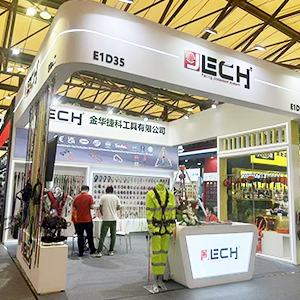
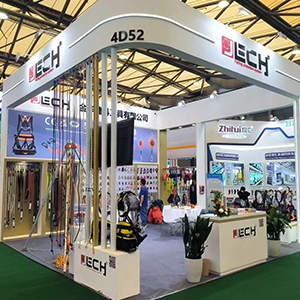
140th Canton FairPhase 1: October 15th–19th, 2026Add.: Canton Fair Complex, Guangzhou (No.382, Yuejiang Zhong Road, Guangzhou, China)JECH BOOTH NO.: 13.2D05-06 Jinhua JECH Tools Co., Ltd. is pleased to announce its participation in the 140th Canton Fair (Phase 1), taking place from October 15th to 19th, 2026, at the Canton Fair Complex, Guangzhou, China. We warmly invite customers and partners from around the world to visit us at Booth 13.2D05-06. Guided by the principles of integrity, safety, science, and efficiency, JECH has built a strong manufacturing base equipped with standardized production lines, multi-stage quality inspection systems, and a dedicated R&D team focused on fall protection technology. Our product range covers full body safety harnesses, safety lanyards, self-retracting fall arresters, guided-type fall arresters, climbing gear, tool lanyards, hardware accessories, and anchor point systems — all developed to meet CE, ANSI, UKCA, and CSA certification requirements for markets across Europe, North America, and beyond. Phase 1 of the Canton Fair brings together buyers from a wide range of industries, and JECH looks forward to presenting our latest product developments and manufacturing capabilities to visitors from this sector. This exhibition offers a valuable opportunity for us to connect with new and existing partners, exchange insights on market needs, and explore new areas of cooperation built on reliable quality and long-term trust. Welcome to visit JECH at Booth 13.2D05-06 — we look forward to seeing you in Guangzhou.
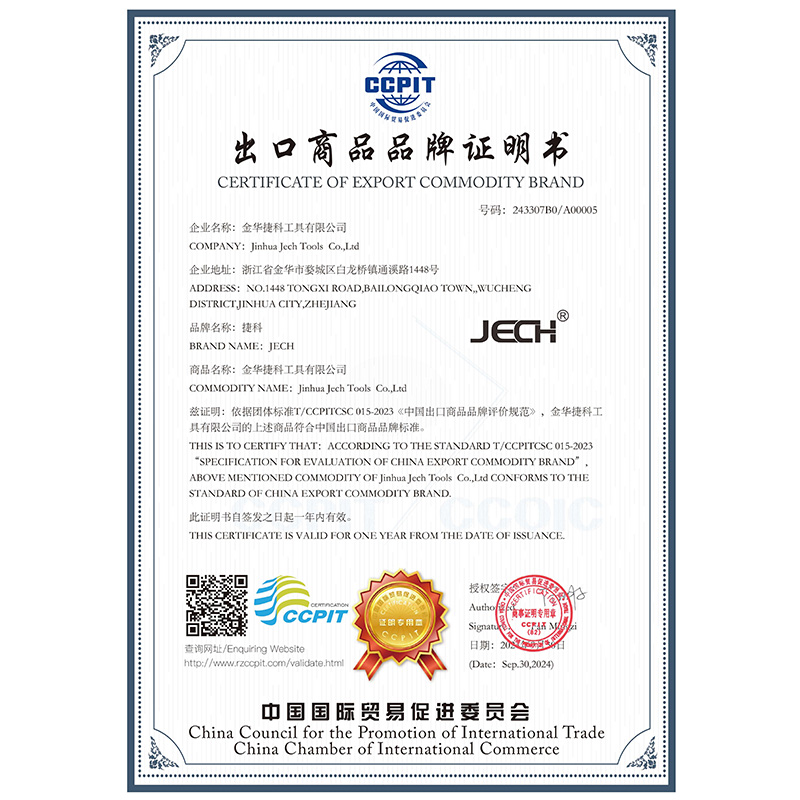
140th Canton FairPhase 3: October 31st–November 4th, 2026Add.: Canton Fair Complex, Guangzhou (No.382, Yuejiang Zhong Road, Guangzhou, China)JECH BOOTH NO.: 13.0C13 Two weeks after wrapping up Phase 1, Jinhua JECH Tools Co., Ltd. returns to the Canton Fair Complex for Phase 3, running from October 31st to November 4th, 2026, at Booth 13.0C13. As a National High-Tech Enterprise recognized in 2019, JECH has built its export business on a foundation of certification compliance, holding 87 CE certificates, 65 ANSI test reports, 27 UKCA certifications, and 6 CSA test reports across its safety harness, lanyard, fall arrester, and hardware accessory product lines. This documentation base allows the company to support buyers moving into markets with strict regulatory entry requirements without lengthy pre-qualification delays. Phase 3 draws a different mix of international buyers than earlier phases of the fair, and JECH is using this stop to focus specifically on OEM/ODM discussions — reviewing custom specifications, private labeling requirements, and packaging needs directly with visiting representatives at the booth. Buyers with upcoming certification deadlines or custom product requirements are welcome to bring their specifications to Booth 13.0C13 for a direct technical discussion with JECH during the fair.
A lanyard that arrests a fall at 4kN in one test and 8kN in the next, despite carrying identical labeling, isn't a product buyers can rely on to protect workers consistently. Manufacturing a Single Shock Absorber Lanyard that performs within tight force limits batch after batch depends on how consistently the internal shock-absorbing component is constructed, not just on the webbing or hook hardware visible from the outside. The Shock Absorber Component Has to Deploy Predictably Inside a Single Shock Absorber Lanyard, a folded or torn-stitch webbing element is designed to progressively give way during a fall, converting kinetic energy into controlled deceleration rather than transmitting the full impact directly to the worker's body. An energy absorbing lanyard manufactured with inconsistent stitch tear-strength will deploy unpredictably, either releasing too easily and failing to control descent speed, or resisting too much and passing excessive force through to the harness and worker. Production lines building this component need to test stitch-tear force at regular intervals throughout a Single Shock Absorber Lanyard run, since thread tension and stitch density can drift as sewing equipment operates over an extended production shift. Force Limiting Must Stay Within a Narrow Certified Range A Single Shock Absorber Lanyard built to limit arrest force to 6kN needs manufacturing tolerance tight enough that every unit in a batch falls within that certified range, since a unit exceeding the limit risks injury even if the fall itself is successfully arrested. Manufacturing teams validate this through drop testing on sample units pulled from production batches, checking peak force readings against the certified limit rather than relying only on the initial design validation performed before mass production began. Comparing Hook and Attachment Configurations Attachment Configuration Typical Application Manufacturing Consideration Single Scaffold Hook Standard anchor point connection Hook gate strength testing Forged Big Hook Heavy-duty or high-clearance anchors Larger throat opening tolerance Rope Adjuster Integration Adjustable working length Adjuster friction consistency Buyers sourcing a Single Shock Absorber Lanyard for scaffolding and general construction typically specify standard hook configurations, while buyers supplying tower or heavy industrial applications often request forged big-hook variants for compatibility with larger anchor structures. Webbing Width and Length Consistency Affects Deployment Behavior A forged hook lanyard built around a webbing length of roughly 6 to 8 feet needs consistent webbing width and material weight across a production run, since variation in these specifications changes how the energy-absorbing element behaves under load even when the shock absorber component itself is built to identical specifications. Manufacturing teams should track webbing supplier lot numbers alongside finished product batches, since a shift in raw webbing material between lots can introduce performance variation that wouldn't be caught without lot-level traceability. Certification and Quality Control for Export Production A Single Shock Absorber Lanyard destined for European markets needs to satisfy the EU 2016/425 PPE regulation, while buyers supplying North American markets require ANSI compliance documentation covering the relevant fall protection standard. Manufacturers running an in-house testing lab can validate both certification pathways on the same production line, which matters for buyers distributing into multiple regions from a single supplier relationship rather than qualifying separate factories for each certification standard. Customization and Bulk Supply for Distributors Buyers building a private-label fall protection line should confirm whether a fall arrest lanyard program allows custom webbing color, hook type, and length adjustments without requiring a full re-certification cycle, since certification testing tied to a specific configuration can add meaningful cost if triggered unnecessarily by a minor customization request. Manufacturers running dedicated production across multiple hook and length configurations can typically accommodate mixed-SKU bulk orders, letting distributors stock a webbing shock absorber range spanning several configurations within a single container shipment rather than committing full volume to one specification.
A worker who falls while wearing an improperly designed harness can suffer serious internal injury even if the fall itself is arrested successfully, because the harness failed to spread impact force across the body the way it was supposed to. An ANSI Full Body Safety Harness is engineered specifically around this load distribution problem, and buyers sourcing this category should understand what the strap configuration is actually doing before comparing suppliers on price alone. Strap Geometry Determines Where Fall Force Lands on the Body An ANSI Full Body Safety Harness routes webbing across the shoulders, around the waist, and between the legs, converging at a dorsal attachment point on the back, and this specific geometry exists to spread arrest force across the strongest parts of the human skeletal structure rather than concentrating it at a single point. A dorsal D-ring harness design positions the attachment point between the shoulder blades so that a fall pulls the body into an upright, controlled orientation rather than allowing it to tip forward or backward in a way that increases injury risk. Buyers evaluating an ANSI Full Body Safety Harness should confirm strap width and stitching pattern specifications, since narrower webbing or inconsistent stitch density can concentrate force differently than the tested configuration a certification was based on. ANSI Certification Confirms Independent Testing, Not Just a Label The ANSI designation on a fall arrest harness indicates the product has been independently tested against specific requirements set by the American National Standards Institute, covering strength, strap configuration, and hardware performance under simulated fall conditions. Buyers should request documentation showing which specific ANSI standard an ANSI Full Body Safety Harness was tested against, such as Z359.11, rather than accepting a general "ANSI compliant" claim, since the standard number determines exactly which performance criteria the product was evaluated on. Comparing Harness Configurations by Application Configuration Attachment Points Typical Application Basic Dorsal Harness Single rear D-ring General fall arrest, vertical access Multi-Point Harness Dorsal plus hip or chest rings Rescue, positioning, confined space entry Harness With Integrated Lanyard Dorsal ring plus attached lanyard Simplified one-piece deployment kits Buyers supplying tower climbing or rope access customers typically request multi-point configurations, while general construction distributors often stock basic dorsal harnesses as the higher-volume standard item. Material Selection Affects Long-Term Strength Retention Webbing on an ANSI Full Body Safety Harness is typically woven from polyester or nylon, and the choice between these materials affects how the harness performs under UV exposure and repeated loading over its service life. A polyester webbing harness resists UV degradation better than nylon in outdoor applications, which matters for buyers supplying construction and tower climbing customers who leave harnesses exposed to sun for extended periods between uses. Buyers should confirm which material a specific SKU uses, since webbing that looks identical in a product photo can differ meaningfully in long-term strength retention once field exposure begins. Testing and Quality Control Before Products Reach Buyers Manufacturing an ANSI Full Body Safety Harness at export volume requires batch-level testing beyond the initial certification process, since stitching consistency and hardware attachment strength can vary if quality control isn't applied throughout a production run rather than only at the design validation stage. Buyers should request documentation showing how many key tests a factory applies to its production process and confirm that testing covers the specific batch under quote rather than relying solely on a certification obtained for an earlier product version. Customization and Bulk Supply for Distributors Buyers building a private-label PPE line should confirm whether a supplier's ANSI Full Body Safety Harness program allows custom webbing color, sizing range, and packaging configuration without requiring a new certification cycle, since certification testing tied to a specific design can be costly to repeat unnecessarily. Manufacturers running dedicated production across multiple harness configurations can typically accommodate mixed-SKU container orders, letting distributors combine harnesses, lanyards, and hardware accessories within a single shipment rather than committing full container volume to one product category.
Fall protection equipment gets specified differently depending on the industry asking for it. A window cleaning contractor and an oil mining crew are both connecting to a vertical lifeline, but the conditions their hardware has to survive are not the same, and that difference shows up in why some buyers specify an alloy steel rope grab over lighter alternatives even when both meet the same certification. Why Industry Setting Changes Rope Grab Selection An alloy steel rope grab commonly appears in environments where the device faces repeated exposure to abrasive dust, corrosive residue, or heavy mechanical contact — building demolition sites, oil mining operations, and industrial inspection work are typical examples. In these settings, the device is rarely used once and stored; it moves along a vertical line dozens of times per shift, gets dropped on concrete or steel decking, and sits exposed to weather between uses. Buyers sourcing for these conditions generally weigh long-term wear resistance more heavily than weight savings, which is where steel construction has an advantage over lighter alloys. Building Demolition and Inspection Work Demolition crews and inspection technicians share a common requirement: the rope grab has to perform reliably even when visibility is poor and the surrounding structure is unstable. An alloy steel rope grab rated to hold its position on a vertical line under sudden load gives workers a dependable stop point without requiring them to check the device constantly during a task. Inspection operations on aging infrastructure add another factor — the device often has to withstand contact with rusted or rough-surfaced steel, which wears down softer materials faster than it wears down alloy steel components. Teams rotating equipment between multiple demolition sites also value that the same alloy steel rope grab model can be reissued to a different crew without a condition check turning up unexpected surface damage from the previous job. Oil Mining and Exposure to Harsh Conditions Oil mining sites combine several stresses at once: chemical exposure, temperature swings, and constant vibration from nearby machinery. A rope grab used in this setting needs corrosion resistance built into the base material rather than relying only on a surface coating, since coatings wear through faster under abrasive daily contact. This is part of why buyers in extraction industries frequently request an alloy steel rope grab with a documented strength rating rather than a generic fall-arrest component pulled from a catalog without industry-specific testing behind it. Window Cleaning: A Different Risk Profile Window cleaning sits at the opposite end of the use-case spectrum from demolition or mining. The rope grab typically travels the same clean vertical line for hours at a time on a building façade, with less abrasive contact but a stronger emphasis on smooth, predictable movement so the technician can focus on the cleaning task rather than the equipment. Weight matters more here than in heavy industrial settings, which is why some window cleaning contractors choose lighter alloy options for daily use while still keeping a steel-bodied device available for jobs on older or rougher building exteriors. Alloy Steel vs. Aluminium Rope Grab: Material Comparison Property Alloy Steel Rope Grab Aluminium Rope Grab Weight Heavier, around 450g Lighter, easier for extended overhead use Abrasion resistance Higher, suited to rough or dusty sites Moderate, better for cleaner environments Typical industries Demolition, oil mining, heavy inspection Window cleaning, light maintenance Corrosion behavior Resists wear from repeated mechanical contact More sensitive to surface scratching Strength rating 16kN typical for this design Comparable strength, lighter frame Matching Certification to Regional Requirements An alloy steel rope grab intended for cross-border sales typically carries both CE certification under EN353-2:2002 and ANSI Z359.15:2014, covering the two standards European and North American buyers commonly ask about. Rope diameter compatibility, usually specified in a 14 to 16mm range for this device type, should also be confirmed against the lifeline already in use on site, since a rope grab rated for one diameter range will not perform predictably on a rope outside that spec. Buyers supplying multiple regions from a single order benefit from confirming both certifications are documented on the same batch rather than assuming dual certification applies automatically across production runs. A factory that keeps CE and ANSI test records tied to the same lot number, rather than treating certification as a one-time approval separate from ongoing production, gives buyers a clearer paper trail when audits or site inspections come up.
When a harness, lanyard, or coil of rope arrives at a distribution warehouse, the packaging often gets less scrutiny than the product inside it — until a batch shows up with torn seams or crushed corners. An oxford cloth packaging bag is one of several material options a factory can offer for shipping and retail packaging, and knowing what separates it from color boxes, PVC tarpaulin, or nonwoven fabric helps buyers pick the right option for how the product will actually travel and get handled. Buyers who default to whatever packaging a factory ships in bulk often overlook how much an oxford cloth packaging bag can be adjusted to fit a specific product category. What Is Oxford Cloth Made From? Oxford cloth gets its name from a basket-weave pattern originally developed for shirting fabric, later adapted into a heavier, more abrasion-resistant textile for bags and covers. An oxford cloth packaging bag is typically woven from polyester or nylon yarn in a plain or basket weave, then coated or laminated on the inside to add water resistance. The weave itself is what gives the fabric its texture and strength — tighter weaves resist snagging and pulling, which matters when bags are stacked, strapped, or slid across warehouse shelving during handling. Why Denier Rating Matters for Bag Durability Fabric weight is measured in denier rating, a term buyers see on spec sheets without always knowing what it changes in practice. A 600D oxford cloth packaging bag, for example, uses yarn heavy enough to resist puncture from sharp product edges like buckle hardware or carabiner gates, while remaining flexible enough to fold flat for storage between shipments. Lighter deniers reduce material cost but also reduce tear resistance, so buyers packaging heavier or hardware-dense products such as safety harnesses or tool kits generally specify a heavier denier than they would for soft goods. A factory able to offer both 300D and 600D fabric on request gives buyers room to balance cost against expected handling conditions for each product line. Zipper Closures vs. Other Bag Openings Closure type affects both protection and retail presentation. A zipper closure on an oxford cloth packaging bag keeps contents fully enclosed during transit and allows the bag itself to double as reusable storage after the product reaches the end user, which some buyers use as a value-add on retail packaging. Drawstring or Velcro closures cost less to produce but leave a small gap where dust or moisture can enter, which matters more for products stored outdoors or in humid warehouse conditions than for items sold and used quickly. How Does Oxford Cloth Compare to Other Packaging Materials? Material Oxford Cloth Nonwoven Fabric PVC Tarpaulin Abrasion resistance High, tight woven structure Moderate, fibers can pill or tear Very high, coated surface Water resistance Good with coating Low unless laminated Excellent, fully waterproof Typical use Reusable tool or gear bags Low-cost promotional bags Heavy-duty outdoor equipment covers Flexibility for folding High High Lower, stiffer material Relative production cost Mid-range Lowest Higher than oxford cloth Matching Bag Size to Product Category Packaging bags for personal protective equipment are rarely one-size items, since a coiled lifeline, a full-body harness, and a set of tool tethers occupy very different volumes. Producing an oxford cloth packaging bag across multiple standardized sizes lets a single fabric and closure specification cover a wider product range without redesigning packaging for every SKU. Buyers consolidating packaging across several product lines can reduce tooling and setup costs by working with a factory that already produces the bag in more than one size on the same base pattern, adjusting only dimensions and color per order. Custom Branding and Color on Packaging Bags Color and branding are usually the last specification buyers think about, but they affect both retail shelf presence and how easily a distributor identifies contents without opening every bag. Custom branding on an oxford cloth packaging bag produced in a factory's base color, such as black, can typically be dyed or printed to match a buyer's brand requirements at order volume, with logo placement added through screen printing or heat transfer depending on the artwork. Buyers working across multiple SKUs often standardize on one base fabric and closure style, then vary only color and branding per client or product line, which keeps unit cost predictable while still giving each product a distinct retail identity. For buyers bundling packaging with the product order itself, confirming color and branding reduce times upfront avoids delays that would otherwise hold up an entire shipment over a single unfinished component.
Dropped-object programs usually get attention at the tether level — carabiners, coils, retractable lines — while the small loop that actually connects the tether to the tool gets treated as an afterthought. That is a mistake procurement teams often correct only after a batch of attachments fails in the field. A tool tether anchor attachment is the fixed point on the tool itself, and choosing the wrong style, material, or hardware rating can undermine an otherwise well-specified tethering program. What Does a Tool Tether Anchor Attachment Actually Connect To? A tool tether anchor attachment sits between the tool body and the tether line, usually sewn, bolted, or looped directly onto the tool or its housing. It is not the same component as the tether itself — the tether is the flexible line running to the worker's harness or a fixed anchor, while the attachment is the small hardware piece that stays permanently fixed to the tool. Buyers writing specifications sometimes bundle these two components into one line item, which leads to mismatched hardware ratings when the tether and the attachment come from different production runs. Treating the tool tether anchor attachment as its own line item, with its own rated capacity and material spec, avoids that mismatch before an order is placed. Which Material and Hardware Should You Specify? Attachment webbing is commonly made from polyester rather than nylon, since polyester resists UV degradation better during long outdoor exposure and holds its shape under repeated tool handling. The connecting ring is a separate consideration: stainless steel D-rings resist corrosion in wet or coastal job sites, while lighter-gauge alloy rings suit indoor or maintenance environments where weight matters more than corrosion resistance. Webbing width also affects durability — a 15mm webbing attachment distributes tool weight across a wider surface than narrower cord loops, reducing wear at the stitch point over repeated connect-disconnect cycles. A supplier who can vary D-ring finish, webbing width, and color on the same tool tether anchor attachment base design gives buyers more room to match hardware to site conditions without re-tooling an entire product line. How Much Weight Should the Attachment Be Rated For? This is where many specifications go wrong: buyers rate the tether for the tool's weight but leave the anchor attachment unrated, assuming it will hold whatever the tether holds. In practice, the attachment point often sees repeated flex and torque that the straight-line tether does not, so tool max capacity should be confirmed for the attachment itself, not inferred from the tether rating. A drill or grinder near the upper end of a typical capacity range needs an attachment tested at that load, not simply "rated for tools." Requesting the tested capacity in writing, separate from the tether's rating, is a reasonable question to put to any factory quoting a tool tether anchor attachment order. Does the Certification Match the Application? ANSI/ISEA 121:2018 is the reference standard buyers commonly ask about when specifying dropped-object prevention equipment for construction, industrial maintenance, and utility work. An anchor attachment tested to this standard has documented pull-test data behind its rated capacity, rather than a capacity figure assigned by the factory without third-party verification. Buyers sourcing for regulated sites should request the test report alongside the product, not just a certificate number printed on the packaging. Sewn Loop vs. Elastic Loop Attachment Styles Feature Sewn/Fixed Loop Attachment Elastic Loop Attachment Tool movement Rigid, no flex during use Absorbs minor tool movement Suited for Static tools, tools handled infrequently Frequently rotated or handled power tools Attachment method Sewn or bolted to tool housing Wrapped and secured around tool grip or handle Wear pattern Stress concentrated at stitch point Stress distributed across elastic loop Typical connector Fixed D-ring D-ring or loop-through connection What Should You Ask a Supplier Before Ordering in Bulk? Buyers placing volume orders for tool tether anchor attachment components should confirm three things beyond the spec sheet: whether webbing color and length are customizable per project (attachments are commonly produced at 300mm with color options), whether the connected tether length stays within the 1200mm limit typical of ANSI/ISEA-compliant systems, and whether the factory can supply matched sets so tether and attachment hardware come from the same qualified batch. A supplier able to confirm all three in writing is generally better positioned to support a multi-site rollout than one offering only a single generic attachment style across every tool category.